Wednesday, January 30, 2013
Scientist Research
Andre W. Visser is a Professor of Physical Oceanography in Denmark, at the Technical University of Denmark. I chose this scientist because I have always been interested in marine biology and I had never heard of biomixing( the action of swimming organisms in mixing the worlds oceans) and it caught my eye.
The journal I read was debating biomixing the oceans with small organism. It is contemplating if small organisms are exerting enough energy to make up for the heat they are putting off. The article also posses the question that if the small amount of mechanical energy can substantially mix the water. It tells that biomixing is controlled by "the scale at which turbulent kinetic energy is imparted to the flow", "equivalent to the rate of work done",and "a measure of the stratification of the water column" and how each of these factor into the equation. The article concludes in saying that small organism do not have great enough efficiency to sufficiently mix the oceans.
I have many questions about the article including: What made you want to research biomixing? What type of tests have you done on this? Is there a substantial difference between different small organisms? Have you tested this with larger organisms? and finally Do you think that it would be harder to get larger organisms to swim at a consistent rate?
Friday, December 7, 2012
Fred's Journey
There is a
molecule, let’s call him Fred. Fred could not be created or destroyed. Fred was
a carbon molecule and was very important as a vital part in every organism’s
body and can be in many states in the abiotic world.
Well Fred one
day realized that he could not move as if he was solid, suddenly he felt very
hot like he was being burned then he was free. He could go anywhere he wanted now;
he was part of the air, he was in Co2, a gas with two oxygen molecules. He
enjoyed being able to fly around and liked being a gas.
A plant then
absorbed Fred and he is put into the Calvin Cycle of photosynthesis and came
out as part of C6H12O6 as a solid with a lot of hydrogen and a bunch of oxygen.
Soon after, he is transferred to Glycolysis (in Cellular Respiration) inside
the plant. After going through a very strange process with a lot of moving he
is put into some pyruvate. The pyruvate is transferred to the Krebs cycle as acetyl
co a. He is kicked out of Krebs cycle as CO2 and leaves the plant.
Glad to be out of the plant, Fred is suddenly
absorbed into the next plant over. He goes through photosynthesis again. He
again teams up with the hydrogen and oxygen, but before he is transferred to cellular
respiration the plant is eaten by a human. And Fred goes with it!
After entering the human’s body the plant is broken
up. Fred finds himself in an odd structure though all surrounded by many other
different molecules. Fred is in a cell in the palm of the human’s hand going
once again through cellular respiration! He decided he would like to stay here
for a while but what freed doesn’t know is that he will not be here for too
long before he goes through the cycle again!
Thursday, November 8, 2012
November Plot Reflection
Today we went out into the woods to go check up on our plot
for the first time since we marked it. I thought that the plot was going to be
the same as it was last time, and I was surprised to find out how wrong I was.
The plot looked much different, the leaves on the trees had all changed or
fallen off and there was much more ground cover. Many of the smaller trees
seemed to have disappeared. I assume they have either died from the cold or are
hidden under the excessive ground cover. The site was very damp due to the fact
that it had rained for the past two days. Being the arborist I measured all of
the trees again, and it seemed that some of the saplings that were still
visible had grown. I noticed on the corner of our plot that there were 3 types
of moss as well as many broken acorns and nuts showing that there are possibly
small mammals living in a tree. In the coming months I expect to see more
ground cover as trees continue to shed their leaves as well as more growth in saplings.
I wonder how the saplings will react as it gets colder as well as if we will
continue to see the broken acorns.
Friday, October 26, 2012
Cells-R-Us
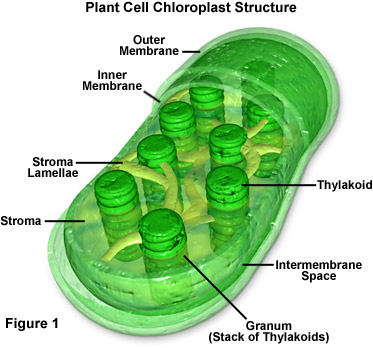
In the giant cell that our class made there were many organelles and mine was the chloroplast. The chloroplast is only in plant cells and are the organelles that carry out photosynthesis. The real size of my cell is 2x5 um and when magnified it is 8 by 20 cm. Our giant class cell was a plant cell because it had both chloroplasts and a central vacuole, both of which are only in plant cells. The largest organelle was the central vacuole and the smallest was the ribosomes. I think that based on the size of the organelles in the giant cell that when looking under a microscope the nucleus, central vacuole, and chloroplasts would be most visible. For the most part the shape and size of the organelles did not surprise me except the ribosome which were a lot smaller and complex than I had thought. Over all I liked seeing and being in the giant cell.
Monday, October 22, 2012
Enzymes!!!!
In our experiment we tested whether tempature affected how enzymes work. Our hypothesis was that it would affect the enzymes. To do this we heated one potato in boiling water for two minutes one in ice water for two minutes, and one we did nothing to. We then put then in test tube and poured 7 cm of hydrogen peroxide on them and waited for two minutes. After the two minutes we measured the foam. On the one that was in nothing the foam measured 3 cm the one that was in ice water the foam was 1/2 cm, and the one that was in the boiling water did not foam at all. This showed that our hypothesis was correct. In the future we could be more exact in all of our measurements. This can be applied to real world situations in the way that your body changes tempature when you are sick and that can affect how the enzymes in your body work.
Friday, October 5, 2012
Plot Reflection
On Wednesday our group went into the great outdoors and
picked a plot. It is located along the Outer Perimeter and we are the farthest
out of all of the groups in our class. The plot is a circle with an 11ft radius
and is on a slope covered with fallen leaves. It is composed of a few adult
trees, lots of saplings, and a small patch of ferns, mosses which we collected
data on. The trees in our plot are mostly sourwood trees and white pines, but
there is a red maple and a few we have not yet identified. We took the soil ph
and temperature as well as collected a sample and plan to look into what this
tells about the soil. We also found one
or two mushrooms that we are identifying as well as many small insects.
We will be carefully observing this plot each month through
the year and reporting any changes. We expect to see changes in the leaves of
the trees as well as seeing if the younger trees survive the winter. Also, we
will be checking for change in soil ph & temperature and differences in the
animals and fungus we collect. We are excited to be observing this piece of
nature throughout the year.
Wednesday, September 26, 2012
Mushrooms!!!!
This week I learned a lot about
fungi and how important they are to the world. The kingdom fungus is made up of
primitive fungi, sac fungi, bread molds, and club fungi. Fungi are earths
decomposers and help the earth enormously. There are over70,000 types that have been named and possibly 1.5 million that haven't! All fungi are made up of mycelium
which is a thread like structure that grows underground. The mycelium may
produce a fruiting body that is and above ground structure (like a mushroom)
that is used to release spores to reproduce.
If
you ever want to go on a mushroom foray, you might want to keep some things in
mind. First of all you need to know that mushrooms are usually found below
trees or on dead matter and they usually show up after a nice long rain. When
you pick a mushroom don’t worry about killing it because what you are picking
is just the fruit and the majority of the mushroom is below ground in the
mycelium. Also, make sure to dig up the entire mushroom and observe where you
found it so you can identify it. When identifying it you want to use a mushroom
key and field guide. When using these tools pay attention and make sure all of
the characteristics match up, also be aware that the picture in the book may
not be the same color as the mushroom you found.
When
we went out on our foray we found lots of mushrooms. One of the mushrooms we
found was brownish red with a tan underside. It seemed to be a shelf fungi and
it was attached to a tree with others like it scattered around. We put it in a paper
bag and when we got back to the lab, we saw that the spore print was light brown.
Spore prints show the color of the spores of the mushroom releases in nature
and are important in identifying mushrooms. We then tried to identifying it
with a mushroom key but didn’t find out what it was that it was a polypore.
From there we looked in a field guide under polypores but couldn’t find it we
looked again after realizing that it might not be the same color in the picture
and found that it was an “Artist’s Conk.”
From this we learned that when identifying any organism, it is important
to take your time and make sure to use as many characteristics as possible!
Subscribe to:
Posts (Atom)